Navigating the Reset: How Spain’s 2026 Driving Laws Will Change Your Daily Commute
Friday, January 23, 2026 @ 9:13 PM
In 2026, motorists across Spain are facing one of the most significant regulatory overhauls in a decade. While the headlines have been dominated by the controversial V16 connected beacons, the Dirección General de Tráfico (DGT) is implementing a much broader set of changes that will redefine road safety, environmental compliance, and even how new drivers are trained.
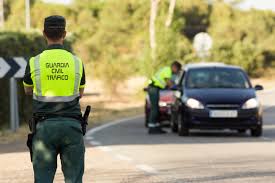
From January 1, 2026, the rules of the road in Spain aren't just shifting—they are being entirely modernised to meet new European standards.
The "Emergency Corridor": A Vital New Habit
One of the most visible changes for daily commuters involves the management of traffic congestion. Spain is officially adopting the "emergency corridor" (Rettungsgasse) system, a practice already common in central Europe. This rule is designed to shave precious minutes off emergency response times during heavy traffic.
-
The Manoeuvre: When traffic comes to a standstill, drivers in the right-hand lane must pull as far right as possible, while those in the left lane must shift left, creating a clear central passage.
-
The Purpose: To allow ambulances, fire engines, and police vehicles to pass through without weaving between lanes or waiting for cars to move.
-
The Penalty: Failure to comply or obstructing the corridor can lead to fines, as the DGT emphasises that "seconds save lives."
Low-Emission Zones (ZBE): The Urban Lockdown
Perhaps the most impactful change for those living in or near urban centres is the nationwide enforcement of Low-Emission Zones. By 2026, the era of "voluntary" compliance is over, and nearly half of Spain's population will live in areas where vehicle access is strictly controlled by environmental labels.
-
Mandatory Scope: All cities with more than 50,000 residents, as well as island territories, must have an operational ZBE. This covers over 149 municipalities across the country.
-
Restricted Vehicles: Petrol cars registered before 2001, and diesel cars from before 2006 (those without a DGT label) face the strictest bans, often being prohibited from entering city centres entirely.
-
Smart Enforcement: Number-plate recognition cameras will automatically issue fines of up to €200 for unauthorised entry, though local councils have the power to grant specific exemptions for residents or deliveries.
Total Seatbelt Enforcement: Closing the Loophole
For years, certain professions in Spain enjoyed common-sense exceptions to seatbelt laws during specific urban manoeuvres. Starting in 2026, the DGT has removed these "grey areas" to ensure a universal safety standard across all vehicles.
-
Who is Affected: Taxi drivers, delivery personnel, and driving instructors are no longer exempt from wearing seatbelts, even when performing short-distance urban tasks or reversing.
-
Zero Tolerance: The rule applies at all times, regardless of the speed or the duration of the journey.
-
Rationale: The DGT argues that consistent habits are the best defence against accidents, especially in high-risk urban environments where frequent stops occur.
Modernising the License: Judgment Over Memory
The way the next generation of drivers enters the road is also being transformed. The classic "theory test" is moving away from rote memorisation and toward a more intuitive, risk-based assessment.
-
Video Scenarios: Instead of just multiple-choice text questions, candidates will now watch short video clips of real-life traffic situations.
-
Risk Identification: Students must identify hazards in real-time and explain their reaction, testing their "driving intelligence" before they even touch a steering wheel.
-
Practical Focus: The goal is to produce drivers who understand the why behind the rules, rather than just the rules themselves.