Despite street protests over housing, tightening municipal rules on tourist flats, and soaring hotel rates, Spain’s tourism juggernaut shows zero signs of decelerating. Fresh data published this week by Spain’s National Statistics Institute (Instituto Nacional de Estadística, or INE) reveals that a staggering 58.1 million international tourists touched down across the country between January and July—a 4.6% increase compared to the same record period last year.
With holidaymakers pouring in through the peak summer heat and spending reaching an eye-watering €82.05 billion (roughly £69.8 billion) so far, Spain is comfortably on track to shatter the symbolic threshold of 100 million visitors before the year is out. Leading that charge, once again, are British travellers.
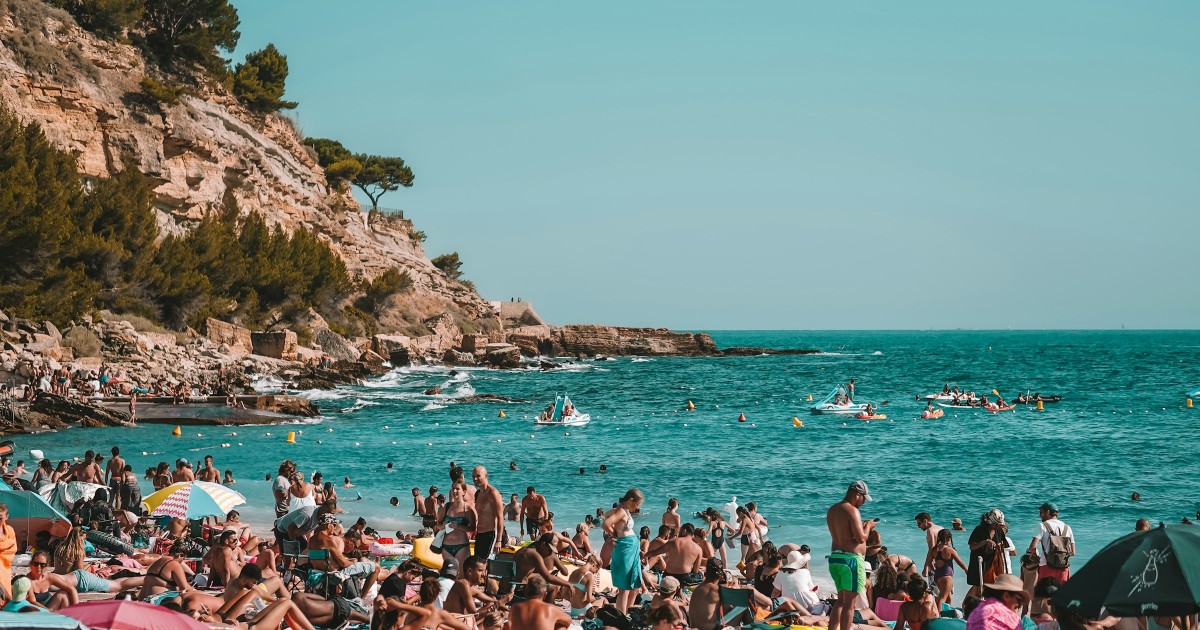
The British Love Affair Remains Unshakable
For all the talk of post-Brexit 90-day Schengen limits and escalating airport queues, the UK market has not flinched. British holidaymakers formed the single largest national contingent by a massive margin, accounting for 11.5 million arrivals in the first seven months—representing nearly one in every five foreign visitors. France followed in distant second with 7.2 million, and Germany third with 6.9 million.
In July alone, Spain welcomed 11.5 million international visitors. What stands out most in the latest Frontur survey isn't just the sheer volume of arrivals, but how much cash they left behind:
-
Total Expenditure (Jan–July): €82.05 billion (£69.8bn), up 7.8% year-on-year.
-
July Spending Surge: Approached €18.22 billion (£15.5bn), a steep 10.9% jump over July last year.
-
Average Spend Per Visitor (July): Reached €1,579 (approx. £1,345), an increase of 5.9%.
-
Average Daily Outlay: Climbed to €218 (approx. £185) per day, up 3.7%.
EOS Insider Context: Tourism now generates nearly 13% of Spain’s total GDP, but the growth pattern is shifting. The fact that tourist spending (+7.8%) is significantly outstripping visitor headcount (+4.6%) shows that rising accommodation costs, higher restaurant bills, and increased airfares haven't deterred visitors—they are simply digging deeper into their pockets.
Where the Crowds Headed: July's Regional Breakdown
The classic coastal destinations absorbed the lion’s share of summer pressure, with the islands and southern coastlines feeling the brunt of peak-season demand:
-
Balearic Islands (22.3% of July arrivals): Mallorca, Ibiza, and Menorca retained the crown for summer holidays, drawn by pristine coves and Mediterranean charm. However, the surge brought familiar friction: severe hire car shortages and strict crackdowns on unlicensed lets and rogue party boats.
-
Catalonia (20.6% of July arrivals): Driven by Barcelona’s cultural pull and Costa Brava beach resorts. The region remains under intense scrutiny as Barcelona begins phasing out all 10,000 holiday let licences by 2028 amid strict water conservation rules.
-
Andalusia (14.6% of July arrivals): The Costa del Sol and Seville saw heavy international footfall for golf and sunshine. In response to rising residential rents, Málaga's town hall has moved to halt new tourist flat registrations in strained districts.
-
Canary Islands (11.8% of July arrivals): Tenerife, Lanzarote, and Gran Canaria continued their robust run backed by reliable direct UK flights, even as widespread local demonstrations called for moratoriums on new hotel permits and limits on mass development.
The Paradox: Economic Goldmine vs. Overtourism Backlash
For those of us who live here year-round or own second homes, these numbers highlight an unavoidable tension playing out across the country.
Recent research conducted jointly by Deloitte and Google projects that Spain will officially overtake France by 2040 to become the world’s most visited country, handling an estimated 110 million annual arrivals. But locally, the seams are straining.
Town halls (ayuntamientos) across Spain are no longer treating tourism purely as an economic victory lap. From Barcelona’s bold pledge to eliminate short-term holiday apartments by November 2028 to Málaga, Alicante, and Seville tightening tourist tax proposals and water usage quotas, the political tide is shifting toward managing capacity rather than blindly chasing volume.
What This Means for Property Owners and Second-Home Seekers
If you own a holiday home in Spain or are weighing up an investment on the Costas, the takeaway is clear:
-
Rental Licence Scrutiny: If your property relies on short-term holiday letting income to cover community fees and mortgage payments, ensure your regional tourist registry number (Vivienda de Uso Turístico / VUT) is fully compliant. Authorities are actively using AI scrapers and local inspections to fine unlicensed operators up to €100,000.
-
Shift Toward the Shoulder Seasons: The traditional June-to-August crush is increasingly expensive and stiflingly hot. Savvy second-home owners are spending peak summer back in the UK or in northern Spain (such as Asturias or Cantabria) and enjoying the Costas during May, June, September, and October, when daily temperatures hover around 24°C and restaurant terraces have breathing room.
Spain’s pull on British holidaymakers remains irresistible. The challenge over the next decade won't be attracting visitors—it will be ensuring the country doesn't become a victim of its own extraordinary success.
Over to You: Has Summer Tourism Reached Its Breaking Point?
Have you noticed the surging crowds and rising prices in your corner of Spain this summer? Do you think Spain should introduce caps on arrivals, or is the economic benefit simply too vital to tamper with?
Tell us your experiences on the ground in the comments below...