If you are navigating the coastal dual carriageways of the Costa del Sol, pottering between villages on the Costa Blanca, or running errands in town, it pays to keep both hands on the wheel and your phone firmly out of reach. Spain’s Directorate-General for Traffic (Dirección General de Tráfico, or DGT) has launched an intensive nationwide enforcement campaign targeting driver distractions—bringing a sharp surge in roadside patrols, automated surveillance cameras, and stiff €200 fines (approx. £170).
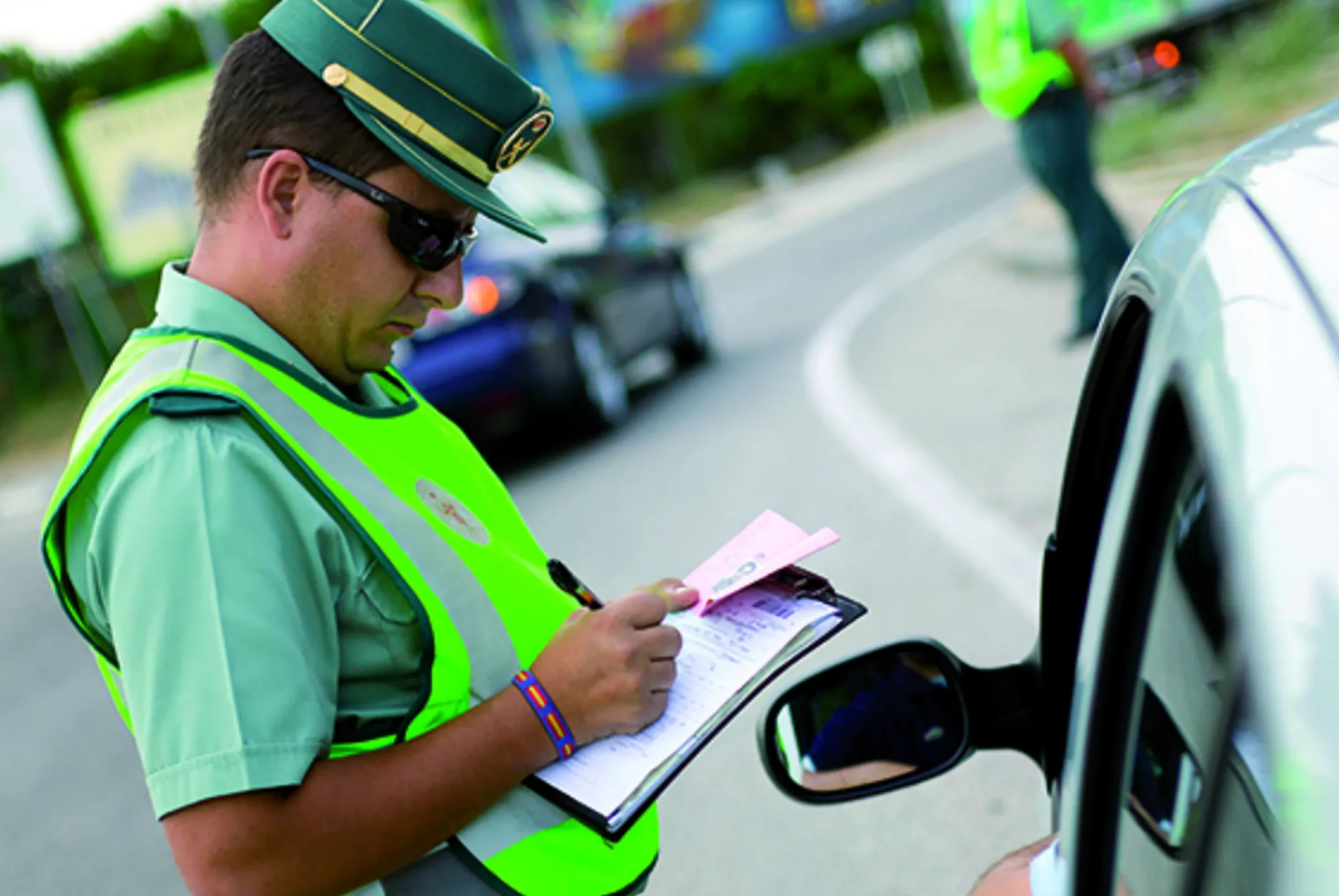
The week-long blitz, organised under the pan-European ROADPOL Focus on the Road initiative, mobilises thousands of Guardia Civil de Tráfico officers alongside regional police forces (Mossos d'Esquadra, Ertzaintza) and municipal Policía Local squads. Crucially, traffic chiefs have confirmed they are deploying hundreds of high-definition automated roadside gantries and mobile camera vans capable of peering directly through windscreens.
For British expats, second-home owners, and holiday drivers, assuming you are safe just because you haven't seen a marked patrol car could prove to be an expensive mistake.
The Mobile Phone Trap: Why Holding Is Enough to Be Fined
The DGT’s primary target during this blitz is mobile phone distraction, which traffic statistics consistently show is involved in almost half of all driver distraction offences across Spain.
Under Spanish traffic law, the rules around handheld devices leave zero room for legal wrangling:
-
Merely Holding the Device: You do not need to be texting, speaking, or scrolling through social media. Simply holding a mobile phone in your hand while behind the wheel constitutes a serious offence.
-
The Red Light Myth: Waiting at a red traffic light or sitting in a stationary motorway jam is not an exemption. As long as your vehicle is on an active roadway and the engine is running, checking a WhatsApp message or adjusting a GPS route by hand will land you the exact same fine.
-
The Penalty: A flat €200 fine and the loss of six points from a Spanish driving licence. For British drivers using a UK photocard licence, the monetary penalty applies immediately, and points can be logged on a virtual registry linked to your NIE or passport number.
EOS Practical Warning: If your vehicle does not have built-in Apple CarPlay or Android Auto, ensure your phone is secured in an approved dashboard cradle before you turn the ignition. Operating the screen while touching it in a cradle can still be penalised with a €100 fine if officers judge that your attention was diverted from the road ahead.
The Distraction Hit-List: How Penalties Compare
While mobile phones draw the heaviest enforcement, Spain’s General Traffic Regulations (Reglamento General de Circulación) grant officers wide discretion to sanction any secondary activity that compromises "permanent attention and freedom of movement."
| Driving Behaviour / Infraction |
Legal Severity |
Standard Fine |
Licence Points Lost |
Key Conditions & Application |
| Holding a mobile phone |
Serious |
€200 (approx. £170) |
6 points |
Prohibited whether the vehicle is in motion or stopped at red lights. |
| Using earbuds or headphones |
Serious |
€200 (approx. £170) |
3 points |
Wired or wireless Bluetooth earbuds are banned while driving or riding. |
| Eating or drinking behind the wheel |
Minor |
Up to €100 (approx. £85) |
None |
Applied if it impedes proper, two-handed vehicle control. |
| Resting arm out of the window |
Minor |
Up to €100 (approx. £85) |
None |
Sanctioned if driver's seated posture impairs immediate reaction. |
| Driving in sliders or backless footwear |
Minor / Serious |
€80 – €200 |
None |
Banned if footwear slips or interferes with safe pedal operation. |
Eyes in the Sky and Hidden Lenses
What catches many expat motorists off guard is the sheer depth of Spain's automated surveillance network. You no longer need to be flagged down by a motorcycle patrol to receive an official registered notification from Tráfico:
Spain's Multi-Layered Traffic Net:
├── Roadside Gantries: Automated overhead cameras with high-res optical zoom
├── Unmarked Vans: Mobile DGT units positioned along interurban routes
├── Pegasus Fleet: Traffic helicopters equipped with gyroscopic telephoto lenses
└── Fixed Patrols: Synchronised checkpoints by Guardia Civil & local police
These camera units take multiple high-speed, burst-frame photographs into the cabin. The automated software flags potential violations—such as holding a phone or unfastened seatbelts—before sending the images to the DGT's automated processing centre in León for human sign-off.
The "Pronto Pago" Window: How to Save 50%
If you are stopped by an officer or receive a notification in the post, timing is everything under Spanish administrative law.
-
The 20-Day Discount: Spain operates the pronto pago (prompt payment) system. If you settle the penalty within 20 calendar days of notification, you receive an automatic 50% reduction, dropping a €200 fine down to €100 (approx. £85).
-
The Catch: Paying the discounted rate acts as an immediate waiver of your right to appeal (recurso), bringing the administrative file to a permanent close.
-
Electronic Notifications: If you are a resident registered on the DGT’s Dirección Electrónica Vial (DEV) or use the miDGT mobile app, notifications are delivered digitally. Keep your linked email and phone number current to ensure the 20-day discount clock does not expire unnoticed.
With Spanish roads growing increasingly busy this autumn, keeping your phone tucked away in the glove box is the simplest way to avoid an uninvited dent in your wallet.