If you've been driving in Spain recently, you’ve likely heard the chatter about the new V16 emergency beacons. As of January 1, 2026, these connected flashing lights officially replaced the traditional warning triangles as a mandatory safety requirement for vehicles on Spanish roads.
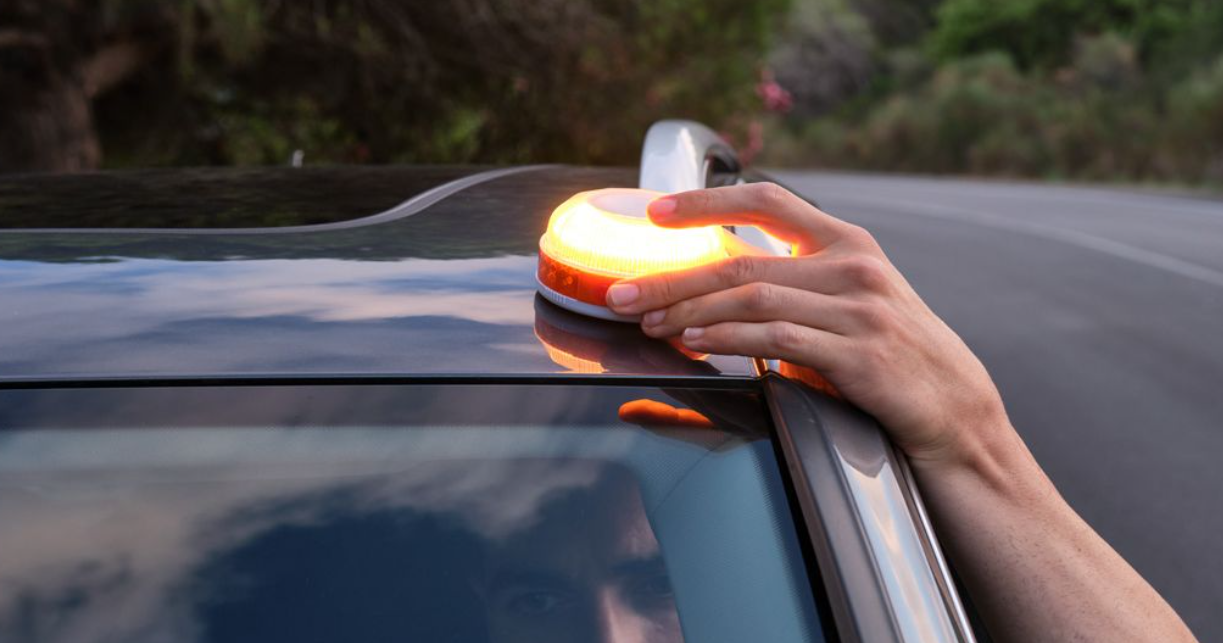
While the DGT claims the beacons (which cost between €30 and €50) will make breakdowns safer, the rollout has sparked plenty of controversy. Even the European Commission has questioned the legality of making the new tech compulsory. But despite the debates, the first fines are already being handed out.
If you've been slapped with a penalty for not having a V16 beacon, don't panic just yet. Here is a look at what went wrong with the rollout and how you might be able to challenge the fine.
The First Fines Are Already Here. The first highly publicised fine was issued on January 6th (Three Kings' Day) to a driver on the AP-7 motorway near Valencia. A Guardia Civil traffic officer handed the driver an €80 fine (reducible to €40 for prompt payment) for failing to carry the regulatory V-16 signal, citing breaches of the Traffic Law and General Vehicle Regulations.
The fine quickly caught the attention of legal experts, highlighting a massive contradiction between the actions of the Guardia Civil and the promises made by the Spanish government.
What Happened to the Promised "Grace Period"? Before the law came into effect, the DGT and top government officials—including Interior Minister Fernando Grande-Marlaska and DGT Director Pere Navarro—spoke publicly about a transitional "grace period." Expats and locals alike were assured that officers would initially focus on informing and educating drivers about the new requirement rather than immediately reaching for their ticket books.
The problem? This grace period was entirely verbal. It was never officially put into writing, nor was an end date defined. This vagueness left a legal grey area, meaning traffic officers on the ground have been legally permitted to issue fines from day one, despite the public reassurances of leniency.
How You Can Challenge the Fine. If you have received a fine during these early weeks of the new law, you have the right to file an appeal (recurso).
According to Pyramid Consulting, a legal firm specialising in Spanish traffic fines, drivers have a solid foundation to appeal based on the legal principle of "legitimate expectations" (principio de confianza legítima). In Spanish law, this doctrine dictates that public administration must act in a predictable, consistent, and transparent manner.
Because top officials publicly promised a grace period and no immediate fines, penalising drivers just days into the new year contradicts those statements. In simple terms, the authorities promised leniency, the public trusted that promise, and therefore, early enforcement is unfair.
While success is never 100% guaranteed—since the law technically remains in force—legal experts suggest that appeals that cite this lack of a defined grace period and the conflicting official messages have a very good chance of succeeding.
A Quick Note for Expats and Tourists If you are driving a rental car, the hire company should be responsible for ensuring the vehicle is equipped with a V16 beacon. Additionally, the mandate currently targets Spanish-registered vehicles, so if you are driving a foreign-registered car on a visit to Spain, you should technically be exempt—though having one certainly doesn't hurt for your own safety.